Guides
Permeable Pavers in Florida: How They Handle Tampa Bay Rain
What happens to rain on a permeable patio, how hard Wesley Chapel storms fall, which Florida yards are wrong for one, and the upkeep that keeps the joints open.
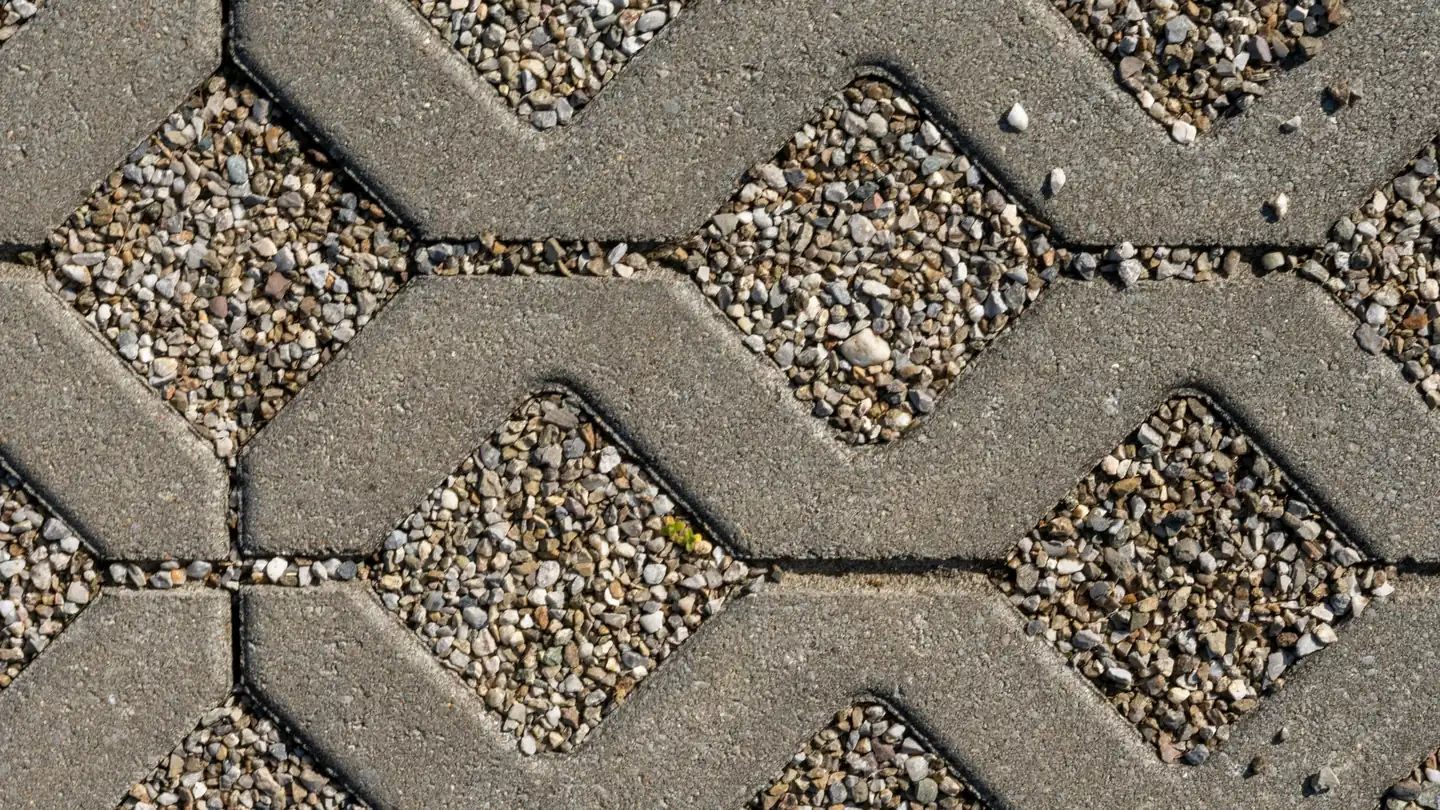
Permeable pavers handle rain by letting it run through stone-filled joints into a stone base, which holds the water until the soil below soaks it up. The paver industry’s association (CMHA) wants a new surface to take in 100 inches of water an hour. That is more than 13 times the pace of the 15-minute downpour Wesley Chapel can expect about once in 100 years (NOAA Atlas 14). The limits sit lower down: slow soil, a high water table and clogged joints. Medscapes builds them across Tampa Bay.
Permeable pavers are concrete pavers laid with open joints full of small washed stone over a stone base, so rain soaks through the surface instead of running off it.
What happens to rain that lands on permeable pavers?
Rain on a permeable surface drops through the joints, passes a bedding layer of small stone and fills the gaps in a deeper base of larger stone. The base holds it while the soil underneath soaks it up. UF/IFAS’s technical guide, Permeable Pavement Systems (AE530), names the base as the layer that does most of the storing.
Standard pavers sit on sand, with sand in tight joints that let little water in, says the Concrete Masonry and Hardscapes Association (CMHA). A permeable system uses no sand in any layer, only washed stone (CMHA, Maintenance Guide for Permeable Interlocking Concrete Pavements). Our guide to paver patio ideas shows where a permeable patio fits among the other options.
Can a permeable patio keep up with a Tampa Bay storm?
A new permeable surface takes water in faster than any storm in NOAA’s tables for Wesley Chapel. CMHA, the concrete paver industry’s association, recommends that a finished surface test at 100 inches an hour or more (CMHA, Construction of Permeable Interlocking Concrete Pavement Systems). NOAA puts the 15-minute burst Wesley Chapel can expect about once in 100 years at 1.87 inches, a pace of about 7.5 inches an hour (NOAA Atlas 14, Precipitation Frequency Data Server).
| Storm length | Every 2 years | Every 25 years | Every 100 years |
|---|---|---|---|
| 15 minutes | 1.07 | 1.60 | 1.87 |
| 1 hour | 2.18 | 3.28 | 3.94 |
| 24 hours | 4.61 | 8.75 | 12.4 |
The base and the soil set the real limit. Water waits in the gaps between the base stones until the soil takes it, and CMHA says the soil under the base decides how much drains away. About 60% of the yearly rain in the Southwest Florida Water Management District (SWFWMD) falls from June through September (SWFWMD, Rainfall Cycle), so judge a site in the rainy season.
Which Florida yards are wrong for permeable paving?
High water, runoff from beds, steep ground and a nearby well each rule a spot out. CMHA’s construction guide for permeable pavement sets these limits:
- High water: the bottom of the stone base more than 2 feet above the seasonal high water table.
- Runoff from beds: no eroding soil, topsoil or mulch washing onto the pavers.
- Slope: under 12%, with 5% or less the norm.
- Wells: at least 100 feet from a water supply well; check local rules too.
UF/IFAS adds one more in AE530: skip spots where cars turn often, since the pavers can shift, crack or spall there.
On flatwoods lots, the water table is the catch. USDA’s official description of Myakka, a sandy flatwoods soil of peninsular Florida, puts its water table less than 18 inches down for 1 to 4 months in most years (USDA, Myakka Series). Its sandy top lets water in fast, yet USDA rates the soil poorly drained or worse. A stone base on that soil cannot clear CMHA’s 2-foot guideline in those months.
How do you check your yard before you build?
Run these checks yourself before anyone quotes the job.
-
Look up your soil
Draw your lot on the USDA’s Web Soil Survey, note the soil name on the Soil Map tab, then read that soil’s official description.
-
Watch a downpour
Note where water stands, for how long, and where it comes from.
-
Trace the runoff
Beds and lawn should slope away from the spot, and CMHA caps the hard paving that drains onto permeable pavement at five times its area.
-
Check the fall
A 5% slope, CMHA’s norm, is a drop of 5 feet over 100 feet.
-
Find any well
Measure to your well, if you have one: CMHA wants at least 100 feet.
-
Ask your HOA
Send the plan to your community’s review board if it has one.
Then ask any installer for three things CMHA recommends: washed stone in every layer with no sand, an infiltration test on the finished surface, and a visit three to six months later to refill the joint stone once it settles. UF/IFAS’s AE530 also advises using certified, experienced installers and asking to see their earlier jobs.
Have a spot in mind for a permeable patio or walkway? Doug Wilson walks the yard and writes every quote himself.
How do you keep a permeable surface draining?
Keep soil, mulch and clippings off the surface, and keep the joints full of clean stone. CMHA’s maintenance guide likens the joints to an air conditioning filter: they catch dirt near the top until fine particles pack in and water starts to pond (CMHA maintenance guide).
-
Every mowing
Blow or sweep clippings, trimmings and mulch off the pavers, and pile new mulch on a tarp.
-
After a heavy storm
Clear leaves and any soil that washed on.
-
Twice a year
Vacuum loose debris from the joints with a wet/dry shop vacuum, then top up the joint stone.
-
When weeds sprout
Pull them by hand: CMHA says weeds root only where sediment has built up, and herbicide leaves dead roots that slow the water.
Never refill the joints with polymeric sand. UF/IFAS Extension in Hillsborough County says water cannot soak through it (UF/IFAS Hillsborough County, Polymeric Sand and FFL Principle 8). CMHA calls a pressure washer a poor fix too, since it blows out the joint stone and the dirty water soaks back in.
In the next heavy rain, look for standing water. CMHA reads water that stands more than 15 minutes as the sign of a spot close to clogging, and puddles over more than a fifth of the surface as the cue to clean it. A crew restores clogged joints by vacuuming out the dirty stone and refilling them.
Should you build a permeable patio yourself?
Run the checks and the upkeep yourself, and leave the base to a crew. CMHA sizes the base for the water it must store and the weight it must carry, and builds to the deeper of the two (CMHA construction guide).
Medscapes builds permeable paver systems as well as standard paver patios, walkways and driveways. Doug Wilson, our Director of Operations, walks the yard and writes every quote himself. We pull the permits your job needs and call Sunshine 811 before digging on every job that needs it. See pavers and hardscaping in Tampa for the rest of our paver work.
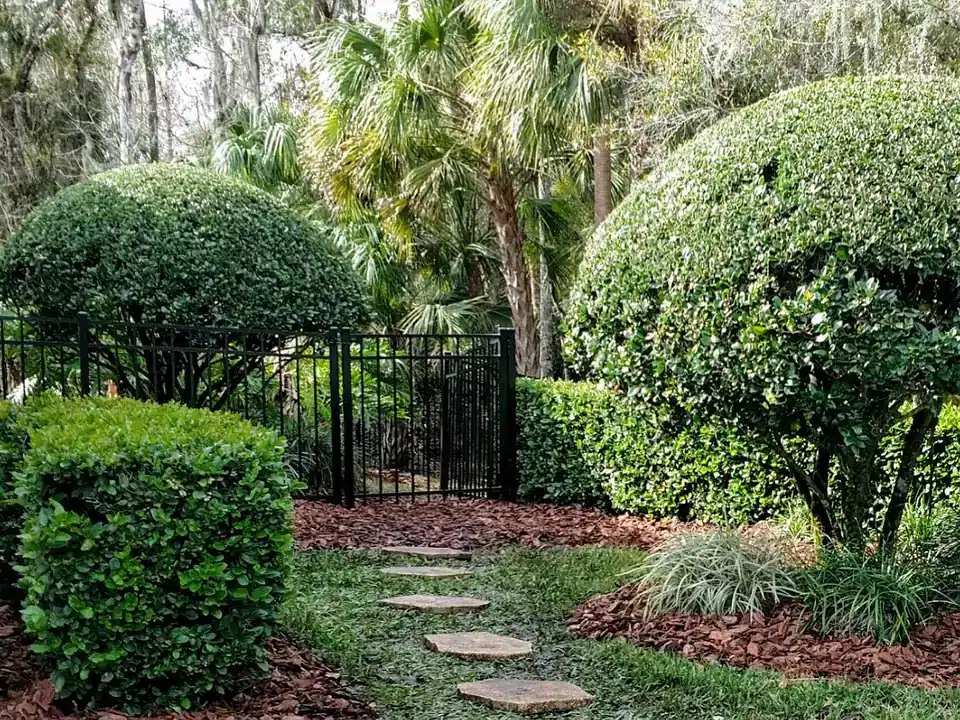
If the water table sits high for months, skip the permeable system. A standard patio sloped into a planted bed still keeps rain on your lot, the aim of Reduce Stormwater Runoff in our Florida-friendly landscaping guide. For a garden path, stepping stones set in the lawn let rain soak into the grass.
Before you ask for quotes, look up your soil and watch where the water goes in the next hard rain.
Frequently asked questions
Do permeable pavers need to be sealed?
A permeable paver system needs no sealer: CMHA lists “does not require sealing” among its benefits (CMHA construction guide). Open joints full of clean stone keep it working.
How long do permeable pavers last?
CMHA gives permeable paver units a 50-year design life, based on field performance (CMHA construction guide). Rain keeps soaking in as long as the joints stay open. UF/IFAS says in AE530 that with upkeep, permeable pavement can keep working for several decades.
Will a permeable surface stop my yard from flooding?
Permeable paving handles the rain that falls on it, plus runoff from hard paving up to five times its area, CMHA says, so it cannot take a flooded yard’s water. UF/IFAS warns against sending runoff from landscaped areas onto it, and a high water table leaves the base nowhere to empty. Plan it as a patio or walk that handles its own rain.
Sources
- Concrete Masonry and Hardscapes Association (industry). Maintenance Guide for Permeable Interlocking Concrete Pavements, PAV-TEC-023, 2020. Checked November 10, 2026. cmha.org
- CMHA (industry). Construction of Permeable Interlocking Concrete Pavement Systems, PAV-TEC-018, 2022. Checked November 10, 2026. cmha.org
- UF/IFAS Extension. Permeable Pavement Systems: Technical Considerations, AE530. Read November 10, 2026 at ask.ifas.ufl.edu.
- NOAA National Weather Service. Precipitation Frequency Data Server, Atlas 14 Volume 9, Wesley Chapel. Read November 10, 2026. hdsc.nws.noaa.gov
- Southwest Florida Water Management District. Rainfall Cycle. Checked November 10, 2026. swfwmd.state.fl.us
- USDA Natural Resources Conservation Service. Myakka Series, official series description. Checked November 10, 2026. soilseries.sc.egov.usda.gov
- USDA NRCS. Web Soil Survey. Checked November 10, 2026. websoilsurvey.nrcs.usda.gov
- UF/IFAS Extension Hillsborough County. Polymeric Sand and FFL Principle #8, May 29, 2024. Checked November 10, 2026. blogs.ifas.ufl.edu
Want to know if your yard suits a permeable patio?
Call (813) 382-5801 or send the estimate form. Doug Wilson walks the yard and writes every quote himself.
- 1Call or book online
- 2Doug walks the yard with you
- 3You get a written quote