Guides
Zone 9b Plants for Inland Tampa Bay: What Survives a Cold Night
Which Tampa Bay ZIP codes the 2023 USDA map puts in zone 9b, which landscape plants UF/IFAS rates for a 9b winter, and what to do before and after a freeze night.
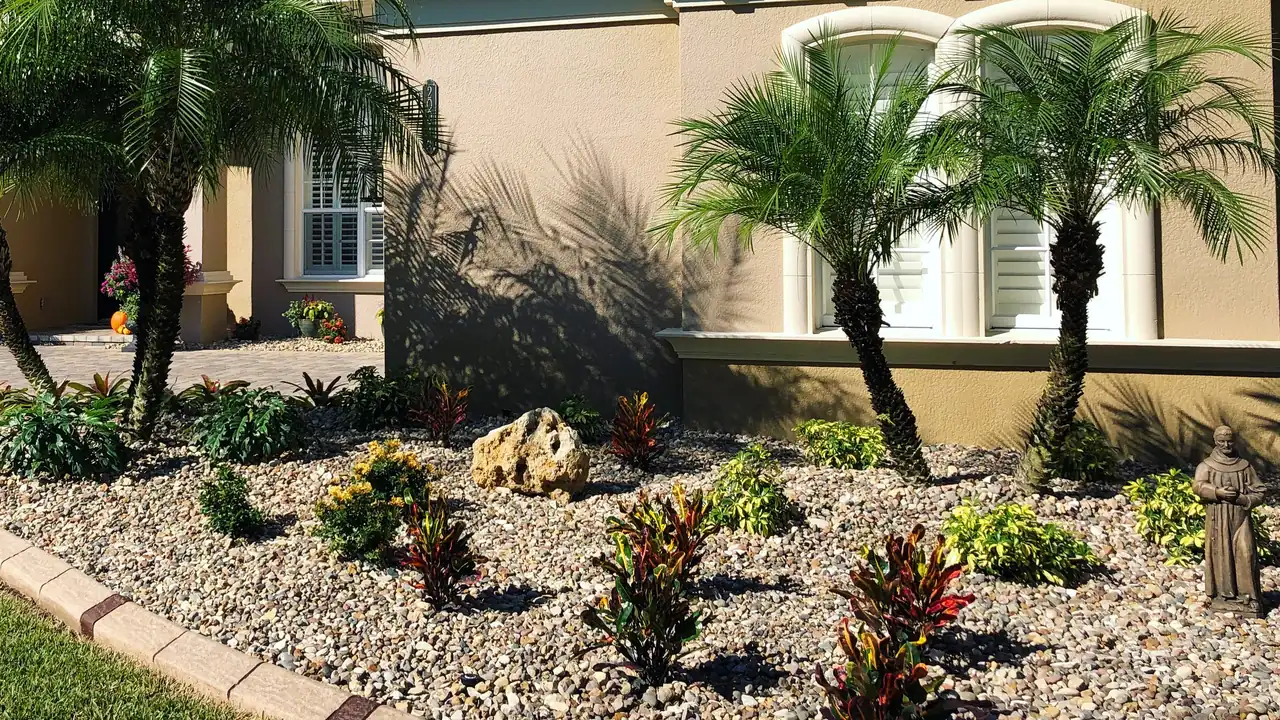
Zone 9b plants are the ones rated to come through an average coldest winter night of 25 to 30°F, the range the 2023 USDA Plant Hardiness Zone Map gives zone 9b. That fits Wesley Chapel, Land O’ Lakes, Lutz, New Tampa and Brandon, which the USDA’s ZIP search puts in 9b; downtown and South Tampa now sit in 10a. Sabal palm, saw palmetto, coontie and podocarpus carry UF/IFAS ratings colder than 9b. Ixora, crotons and bottle palm do not, so they need cover on a freeze night.
Which parts of Tampa Bay are zone 9b?
Every Pasco County ZIP code in the table, and those in north and east Hillsborough County, is zone 9b on the 2023 map; Tampa’s core and its bay-side neighborhoods are 10a. “Tampa Bay is zone 9b” is wrong for part of the city of Tampa itself, so check your own ZIP before you buy plants.
| Place (ZIP) | 2023 zone | 2012 zone |
|---|---|---|
| Wesley Chapel (33543, 33544, 33545) | 9b | 9b |
| Land O’ Lakes (34638, 34639) | 9b | 9b |
| Lutz (33548, 33549, 33558, 33559) | 9b | 9b |
| Zephyrhills (33540, 33542) | 9b | 9b |
| New Tampa (33647) | 9b | 9b |
| Brandon (33511), Valrico (33594), Plant City (33563, 33565) | 9b | 9b |
| Westchase (33626), Carrollwood (33624) | 10a | 9b |
| Downtown Tampa (33602) | 10a | 9b |
| Riverview (33569, 33578) | 10a | 9b |
| South Tampa (33611, 33629) | 10a | 10a |
The 2023 edition moved several Tampa ZIP codes from 9b to 10a. The USDA’s notes on the map say the new edition is “generally about one quarter-zone warmer than reported in the 2012 PHZM throughout much of the United States,” because it averages 1991 to 2020 instead of 1976 to 2005. The ZIP search gives one zone for a whole ZIP code, so a low spot where cold air settles can run colder than its ZIP’s zone.
What does zone 9b mean on a cold night?
Zone 9b means the coldest night of an average winter fell between 25 and 30°F over 1991 to 2020; it is not a forecast. The USDA’s guide to the map says a zone “does not represent the coldest it has ever been or ever will be in an area.”
Tropical plants feel cold well above freezing. UF/IFAS publication Cold Protection of Landscape Plants (MG025) says tropical plants “do not adapt or harden to withstand temperatures below freezing, and many suffer ‘chilling injury’ at temperatures below 50°F.” The same publication says a sudden drop “in late fall or early winter usually results in more damage than the same low temperature in January or February,” which makes December’s first cold front the one to prepare for.
Which landscape plants are rated for a zone 9b winter?
Plants whose UF/IFAS rating reaches 9a, 8b or colder have room to spare on a 9b night; plants rated from 10a up do not.
| Plant | UF/IFAS rating | On a 9b freeze night |
|---|---|---|
| Saw palmetto | Zones 8a to 11a; cold hardy 11 to 15°F | Hardy |
| Sabal (cabbage) palm | Cold hardy to about 15°F, about zone 8b | Hardy |
| Muhly grass | Zones 7 to 11 | Hardy |
| Walter’s viburnum | Evergreen in zones 7 to 10 | Hardy |
| Coontie | Zones 8B to 11 | Hardy |
| Podocarpus | Zones 8B to 11 | Hardy |
| Simpson’s stopper | Zones 8b to 11; cold hardy down to 25°F | Hardy to the bottom of 9b |
| Ti plant | Zones 9B to 11B | At its limit; cover in a freeze |
| Ixora | Zones 10 to 11 | Outside its range; cover |
| Croton | Frost or freeze damages it; it “quickly” recovers | Cover; expect leaf damage |
| Bougainvillea | “Needs to be protected from frost and freeze” | Cover |
| Tropical hibiscus | “Sensitive to cold weather” | Cover |
| Most bromeliads | Grown outdoors “in frost-free areas of Florida” | Cover, or move pots in |
| Foxtail palm | “Not reliably hardy” in most of Central Florida | Outside its range |
| Bottle palm | “Freezing temperatures will most likely kill” it | Outside its range |
The hardy group mixes Florida natives such as coontie and saw palmetto with non-natives such as podocarpus, and each rating comes from its own UF/IFAS sheet, listed under Sources. For Florida-friendly beds planned around Tampa Bay sun and water rules, see our page on xeriscaping in Tampa Bay.
Which common Tampa Bay plants need cover on a freeze night?
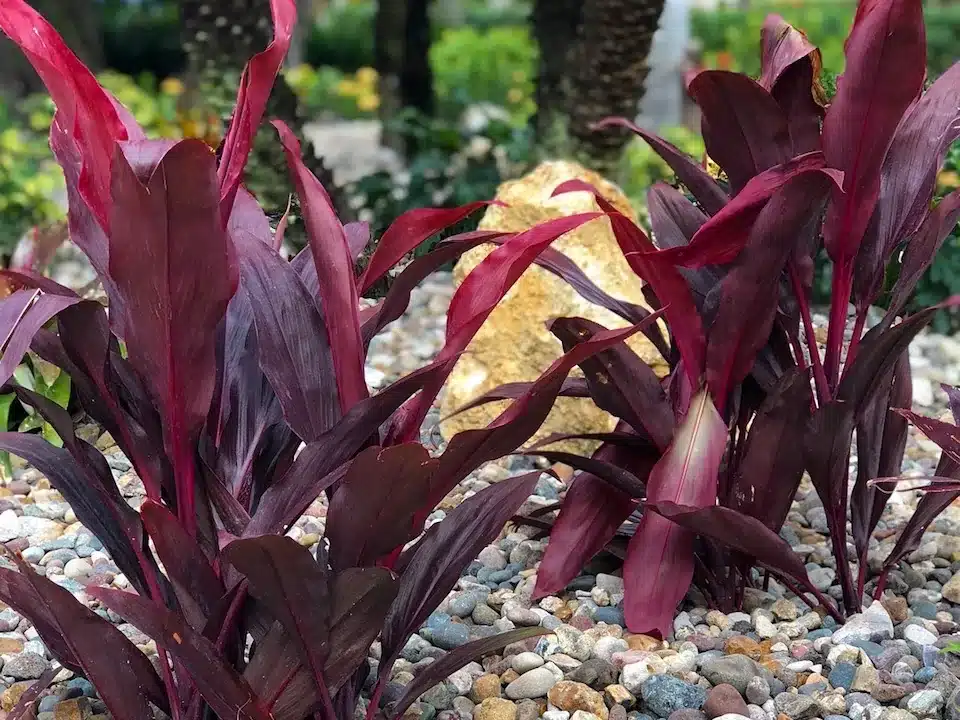
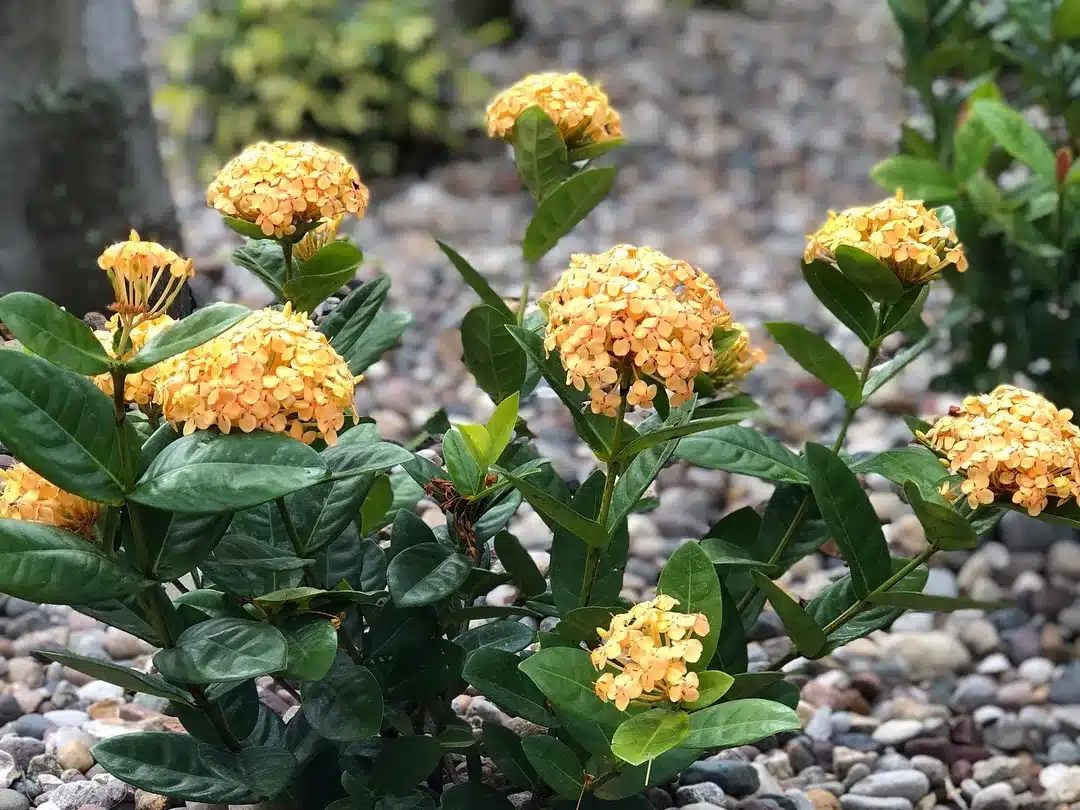
Ixora, crotons, tropical hibiscus, bougainvillea and most bromeliads need cover when a freeze is forecast in a 9b yard, and ti plants sit at the cold edge of their range. UF/IFAS rates the common ixora for zones 10 through 11 (FP291) and the ti plant for 9B through 11B (FP141), and Gardening Solutions says of crotons, “Frosts or freezes will damage them, but they quickly recover.”
Palms split the same way. UF/IFAS’s Central Florida palm guide (EP020) says foxtail and pygmy date palms “are not reliably hardy in most of the region,” and the bottle palm fact sheet says “freezing temperatures will most likely kill this palm.”
How do you protect plants the night before a freeze?
Water the soil during the day, then cover tender plants to the ground before dark. MG025 says a well-watered soil “will absorb more solar radiation than dry soil” and gives the heat back at night; covers help more against frost than against a hard freeze.
-
Water the beds
Wet the soil around tender plants without leaving it soggy, which MG025 says damages roots.
-
Cover to the ground
Frost cloth, sheets or quilts should reach the soil to trap its heat, anchored against wind.
-
Group the pots
Move containers under cover or push them together, then space them out again after the freeze.
-
Turn the sprinklers off
MG025 says to turn off in-ground irrigation before a freeze; home systems cannot sprinkle all night the way farms do, and water restrictions forbid it.
-
Uncover in the morning
Gardening Solutions says to remove covers once the temperature rises above freezing.
The water shortage order still applies on a cold night. In unincorporated Hillsborough County, “hand-watering and low-volume irrigation of plant material other than lawn of turfgrass is limited to before 8 AM or after 6 PM” (county watering page, last modified November 17, 2026), under the Southwest Florida Water Management District order in force through March 31, 2027. Pasco and City of Tampa residents should check their own pages. This is general information about the water shortage rules, not legal advice. Check the current order or ordinance, or ask your HOA or county, before you rely on it.
What should you do after a cold night?
Leave the damage alone until the cold season is over. UF/IFAS Extension in Lake County says to wait “until the danger of freezing temperatures/frost is over. This is around mid-March for most of central Florida,” and MG025 adds that damaged leaves and stems “provide some insulating value to the rest of the plant.”
To find live wood, scrape the bark with a fingernail: MG025 reads green underneath as alive and black or brown as injured. For palms, the UF/IFAS publication on cold damage on palms (MG318) says to leave browned leaves “until the danger of additional cold weather has passed,” because even dead leaves insulate the bud, and that later leaves “are usually normal in appearance.”
Planning a bed that holds up in a 9b winter? Doug Wilson walks the yard and writes the quote himself, and hand sketches are free on approved projects.
Where in a yard should tender plants go?
Put cold-tender plants under tree canopy or beside the house, and keep them out of low spots. MG025 says tree canopy “typically reduces cold injury during radiational freezes” and that tender plants “should not be planted in low areas where cold air settles.” Its other rule suits a mixed Tampa Bay bed: “Intermingle cold tender plants with hardy plants so that the whole landscape is not totally devastated by extremely cold weather.”
That is the first Florida-friendly principle, right plant, right place, applied to cold; the nine Florida-friendly principles guide covers the rest. Medscapes designs and installs beds across Wesley Chapel and Tampa Bay, and our landscape design in Tampa page explains the sketch, 2D and 3D options.
This week, look up your ZIP on the USDA map and note which plants in your beds are rated warmer than your zone. Those get the covers on the first freeze night.
Frequently asked questions
What growing zone is Tampa, Florida?
Tampa has two zones. On the 2023 USDA map, downtown Tampa (33602) and South Tampa (33611, 33629) are 10a, while New Tampa (33647) and 33612 in north Tampa are 9b.
Is Wesley Chapel zone 9b or 10a?
Wesley Chapel is zone 9b. The USDA ZIP search gives 9b for 33543, 33544 and 33545 on both the 2023 and the 2012 maps, so plants rated only for 10a and up need cover on freeze nights for landscaping in Wesley Chapel.
Did the 2023 map change zones around Tampa Bay?
It moved several ZIP codes up half a zone. Downtown Tampa, Westchase, Carrollwood (33624) and Riverview went from 9b in 2012 to 10a in 2023, while Wesley Chapel, Land O’ Lakes, Lutz and Brandon stayed 9b. The USDA ties the shift to its newer 1991 to 2020 averaging period.
When can you prune plants damaged by a freeze?
Wait until frost danger is over, around mid-March for most of central Florida according to UF/IFAS Lake County Extension, or until new growth shows where the live wood is. Pruning early can expose the plant to more damage if another cold night comes.
Sources
- USDA Agricultural Research Service. 2023 USDA Plant Hardiness Zone Map, ZIP code search. Checked November 26, 2026. planthardiness.ars.usda.gov
- USDA. How to Use the Maps. Checked November 26, 2026. planthardiness.ars.usda.gov
- UF/IFAS Extension. Cold Protection of Landscape Plants (ENH1/MG025), revised January 2025. Checked November 26, 2026. ask.ifas.ufl.edu
- UF/IFAS Extension fact sheets: Serenoa repens, Saw Palmetto (FP547); Sabal palmetto (ST575); Muhly Grass (FP415); Zamia floridana, Coontie (FP617); Podocarpus macrophyllus (ST495). Checked November 26, 2026. ask.ifas.ufl.edu, ST575, FP415, FP617, ST495
- UF/IFAS Gardening Solutions: Walter’s Viburnum; Simpson’s Stopper; Poolside Plants (croton); Bougainvillea; Hibiscus; Bromeliads. Checked November 26, 2026. gardeningsolutions.ifas.ufl.edu, stopper, croton, bougainvillea, hibiscus, bromeliads
- UF/IFAS Extension. Ixora coccinea (FP291) and Cordyline fruticosa, Ti Plant (FP141). Checked November 26, 2026. ask.ifas.ufl.edu
- UF/IFAS Extension. Ornamental Palms for Central Florida (ENH-60/EP020), and Hyophorbe lagenicaulis, Bottle Palm (FR307). Checked November 26, 2026. ask.ifas.ufl.edu, FR307
- UF/IFAS Gardening Solutions. Preparing the Landscape for Cold Weather. Checked November 26, 2026. gardeningsolutions.ifas.ufl.edu
- Hillsborough County. Find My Watering Days and Times. Checked November 26, 2026. hcfl.gov
- UF/IFAS Extension Lake County, Brooke Moffis. Cold Protection: Frequently Asked Questions, December 19, 2022. Checked November 26, 2026. blogs.ifas.ufl.edu
- UF/IFAS Extension. Cold Damage on Palms (ENH-92/MG318), Timothy K. Broschat. Checked November 26, 2026. ask.ifas.ufl.edu
- USDA. Map Creation. Checked November 26, 2026. planthardiness.ars.usda.gov
Want beds that ride out a 9b winter?
Call (813) 382-5801 or send the estimate form. Doug Wilson walks the yard and writes every quote himself.
- 1Call or book online
- 2Doug walks the yard with you
- 3You get a written quote