Guides
Florida-Friendly Landscaping in Tampa Bay: The Nine Principles
The nine UF/IFAS principles applied to a Tampa Bay yard, how one-day watering and the county rules shape them, and where your HOA still has a say.
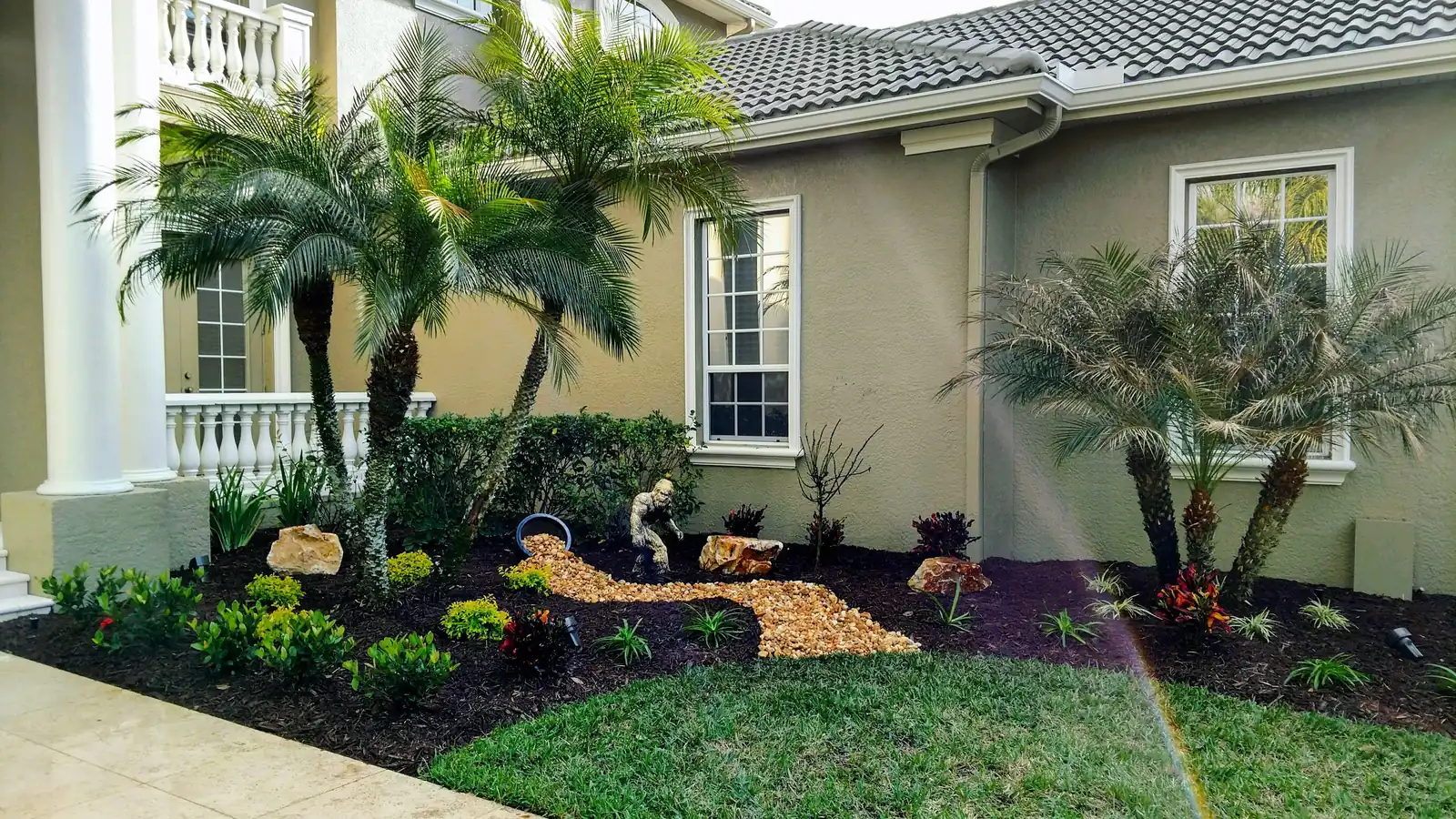
Florida-friendly landscaping keeps the lawn where it earns its place. The UF/IFAS Florida-Friendly Landscaping program rests on nine principles, from putting the right plant in the right place to protecting the waterfront, and a yard that follows them can still have St. Augustine grass. In Tampa Bay the principles meet one-day watering, the county fertilizer rules and a state law that bars an HOA from banning the approach.
Florida-friendly landscaping is the state’s name, in Florida Statutes 373.185, for “quality landscapes that conserve water, protect the environment, are adaptable to local conditions, and are drought tolerant.”
What are the nine Florida-friendly principles?
The nine principles are Right Plant, Right Place; Water Efficiently; Fertilize Appropriately; Mulch; Attract Wildlife; Manage Yard Pests Responsibly; Recycle Yard Waste; Reduce Stormwater Runoff; and Protect the Waterfront. UF/IFAS lists them in that order on the Florida-Friendly Landscaping program’s principles page. The table puts each one next to what it asks of a Tampa Bay yard.
| Principle | What it asks | The Tampa Bay detail |
|---|---|---|
| 1. Right Plant, Right Place | Match plants to soil, light, water and climate | Group plants by water need and allow for mature size |
| 2. Water Efficiently | Water by the plant, not the calendar | One lawn watering day a week under the SWFWMD order |
| 3. Fertilize Appropriately | Right nutrient, right amount, right time | No nitrogen or phosphorus June 1 to September 30 in unincorporated Hillsborough |
| 4. Mulch | Hold moisture, block weeds | UF/IFAS suggests pine straw, pine bark, eucalyptus or melaleuca, not cypress |
| 5. Attract Wildlife | Food, water, cover | Fruit, seed and flowers for birds and pollinators |
| 6. Manage Yard Pests Responsibly | Scout first, treat least | Treatments for hire need an FDACS-licensed company |
| 7. Recycle Yard Waste | Keep clippings and leaves on site | Clippings never go in storm drains |
| 8. Reduce Stormwater Runoff | Let rain soak in where it falls | Porous paths, downspouts into beds |
| 9. Protect the Waterfront | A low-maintenance zone at the water | At least ten feet wide, no mowing or fertilizer |
Does a Florida-friendly yard have to lose its lawn?
A Florida-friendly yard can keep its lawn. The program’s FAQ says a Florida-friendly landscape “may contain turfgrass, provided it’s the right plant for that location, and it’s cared for responsibly” (UF/IFAS, Florida-Friendly Landscaping FAQs). The program sets no required ratio of beds to lawn.
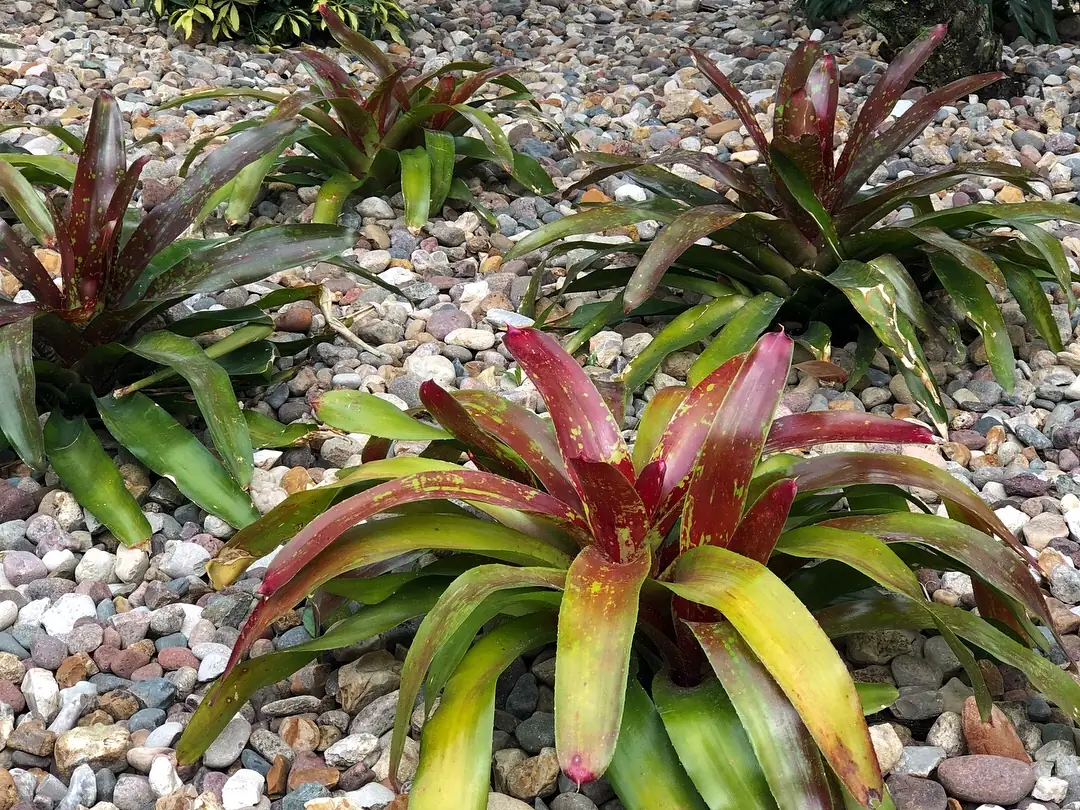
The change is in where the grass goes. UF/IFAS suggests shade plants, groundcovers or pavers where deep shade thins a lawn, and it does not promote yards made only of rock. In its side-by-side comparison, a yard with 25% lawn and 75% beds used 84% less irrigation water than one with 75% lawn, and the yearly upkeep time came out nearly the same: less mowing, more hand weeding.
Can your HOA stop you from going Florida-friendly?
Your HOA cannot ban Florida-friendly landscaping, but it can still review your plan. Florida Statutes 720.3075(4)(b) says HOA documents “may not prohibit or be enforced so as to prohibit any property owner from implementing Florida-friendly landscaping,” and Florida Statutes 373.185 says the same of deed restrictions and local ordinances (Florida Statutes 720.3075; Florida Statutes 373.185).
UF/IFAS spells out the limits. Its Florida-Friendly Landscaping FAQ says the law “does not undo the architectural review process,” so a board can still require approval where the deed restrictions set that process, hold you to its aesthetic guidelines and enforce upkeep. A board may also require St. Augustine grass where it suits the site. Send your plan to the review board before the first plant goes in, and keep the approval letter.
This is general information about Florida Statutes 373.185 and 720.3075, not legal advice. Check the current statute, or ask your HOA or county, before you rely on it.
While the Southwest Florida Water Management District’s (SWFWMD) water shortage order lasts, through March 31, 2027 at the last check, no HOA may enforce community standards that would make you use more water, which the District says “includes requiring a homeowner to replace plant material or to pressure wash homes and driveways to meet aesthetic standards” (SWFWMD, District Water Restrictions). That protection ends with the order.
How does one-day watering change the plan?
One-day watering turns the second principle into a legal limit. The SWFWMD order covers Hillsborough, Pasco and Pinellas counties and limits lawn watering to one day a week through March 31, 2027. Hand watering and micro-irrigation of plants, not lawns, may run any day before 8 a.m. or after 6 p.m.
That split favors beds. A planted bed on drip lines or a hose can get water on the days the lawn cannot, while the lawn waits for its day. UF/IFAS Gardening Solutions says to water a lawn only when at least half of it shows wilt, and to group plants by how much water they need (UF/IFAS Gardening Solutions, The Nine Principles). Our guide to when the SWFWMD water restrictions end covers what to recheck in March.
What do the fertilizer and pest principles mean here?
The fertilizer principle comes with a local calendar. Unincorporated Hillsborough County bans fertilizer containing nitrogen or phosphorus on landscapes from June 1 to September 30, keeps fertilizer at least 10 feet from any surface water, and allows iron and micronutrient “summer blends” in the restricted season (Hillsborough County, Fertilizer Ordinance and Regulation). Other counties and the City of Tampa set their own rules, so read your own county or city page before you buy.
The pest principle starts with scouting. UF/IFAS advises pest-resistant plants, early checks and hand removal, and the least toxic product when a treatment is needed, applied only to the affected plants. In Florida, lawn insect, weed and disease treatments for hire need an FDACS-licensed pest control company.
Where do the lawn and the beds go?
Keep the lawn on open, sunny ground where people walk and play, and give beds the spots where grass struggles. That follows the first principle and the program’s advice on deep shade. Medscapes lays St. Augustine, zoysia and Bermuda sod; our guide to zoysia vs St. Augustine explains how to match the grass to the sun and the traffic.
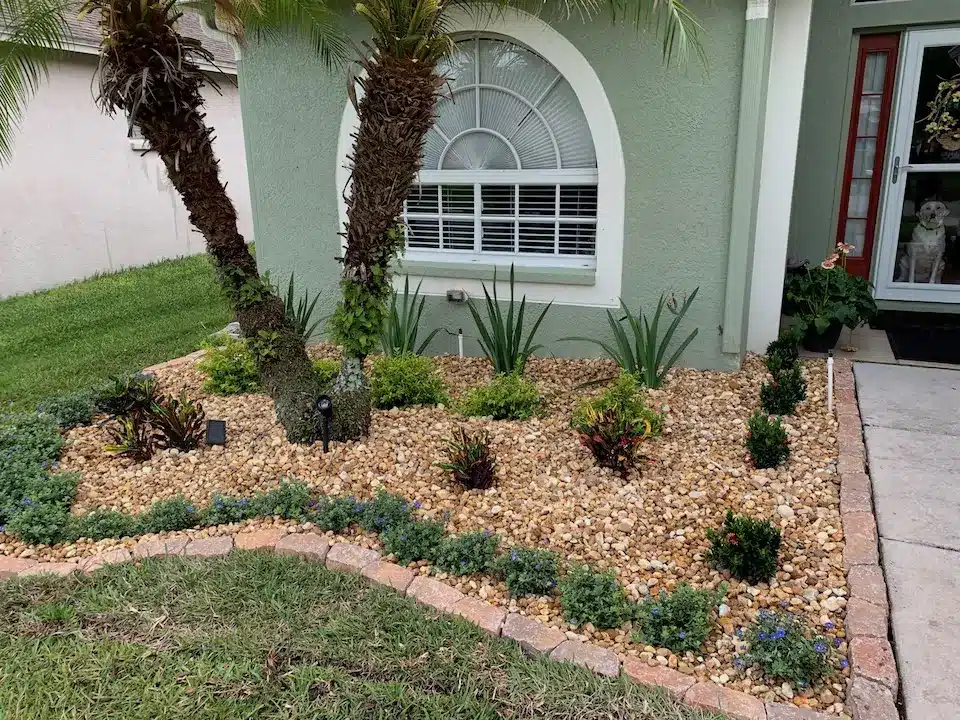
Doug Wilson, our Director of Operations, walks the yard and writes every quote himself. Hand sketches are free on approved projects; 2D and 3D designs are priced per project, and half the design fee goes toward the installation. See xeriscaping and Florida-friendly landscaping in Tampa Bay for how a conversion runs.
Which principles can you start this weekend?
Several of the nine need no plan and no HOA approval. Start with these:
-
Leave the clippings
Let grass clippings fall back on the lawn, and sweep any off the drive and street, since UF/IFAS says dumping them in a storm drain is illegal.
-
Check the sprinkler throw
Run each zone and turn any head that waters the sidewalk or the street back onto the yard; our guide on how to adjust sprinkler heads shows the steps.
-
Mulch the bare spots
Put mulch where grass will not grow under trees, and let fallen leaves stay there.
-
Mark the shade
Note where the lawn thins in shade; those spots are the first candidates for beds when you plan the bigger change.
The bigger moves, a bed where the lawn struggles or a buffer along a pond, start with a sketch for the review board.
Planning a Florida-friendly front yard for HOA review? Doug walks the yard and writes the quote himself.
Frequently asked questions
Is Florida-friendly landscaping the same as xeriscaping?
Florida-friendly landscaping and xeriscaping share the goal of using less water, but UF/IFAS treats them as different concepts. Xeriscape was developed for arid climates; the Florida program adds site-appropriate plants, stormwater filtration and water quality for a state with both soaking rains and dry spells.
Can my HOA make me keep St. Augustine grass?
An HOA can require St. Augustine grass if its deed restrictions say so and the grass suits the site, the UF/IFAS FAQ says. What the HOA cannot do is ban Florida-friendly landscaping outright under Florida Statutes 720.3075.
Does a Florida-friendly yard take less work?
A Florida-friendly yard takes about the same time, spent differently. In the UF/IFAS side-by-side test, yearly upkeep time came out nearly the same, with less mowing and more hand weeding, and the Florida-friendly yard used 84% less irrigation water.
Do Florida-friendly plants have to be native?
Florida-friendly plants do not have to be native. UF/IFAS allows non-invasive non-native plants as long as each one suits its spot, and it notes that a native plant will not thrive everywhere in a developed yard.
Sources
- UF/IFAS Florida-Friendly Landscaping Program. The 9 Principles of Florida-Friendly Landscaping. Checked November 8, 2026. ffl.ifas.ufl.edu
- UF/IFAS Florida-Friendly Landscaping Program. Frequently Asked Questions About Florida-Friendly Landscaping. Checked November 8, 2026. ffl.ifas.ufl.edu
- UF/IFAS Gardening Solutions. Florida-Friendly Landscapes: The Nine Principles. Checked November 8, 2026. gardeningsolutions.ifas.ufl.edu
- The Florida Senate. 2026 Florida Statutes 373.185, Local Florida-friendly landscaping ordinances. Read November 8, 2026. flsenate.gov
- The Florida Senate. 2026 Florida Statutes 720.3075, Prohibited clauses in association documents. Read November 8, 2026. flsenate.gov
- Southwest Florida Water Management District. District Water Restrictions. Checked November 8, 2026. swfwmd.state.fl.us
- Hillsborough County. Fertilizer Ordinance and Regulation. Checked November 8, 2026. hcfl.gov
Want a Florida-friendly plan for your yard?
Call (813) 382-5801 or send the estimate form. Doug Wilson walks the yard and writes every quote himself.
- 1Call or book online
- 2Doug walks the yard with you
- 3You get a written quote