Guides
How to Adjust Sprinkler Heads, and When to Stop
Step-by-step adjustments for spray heads and rotors, the head problems that leave dry spots, and the repairs that belong to a licensed irrigation contractor.
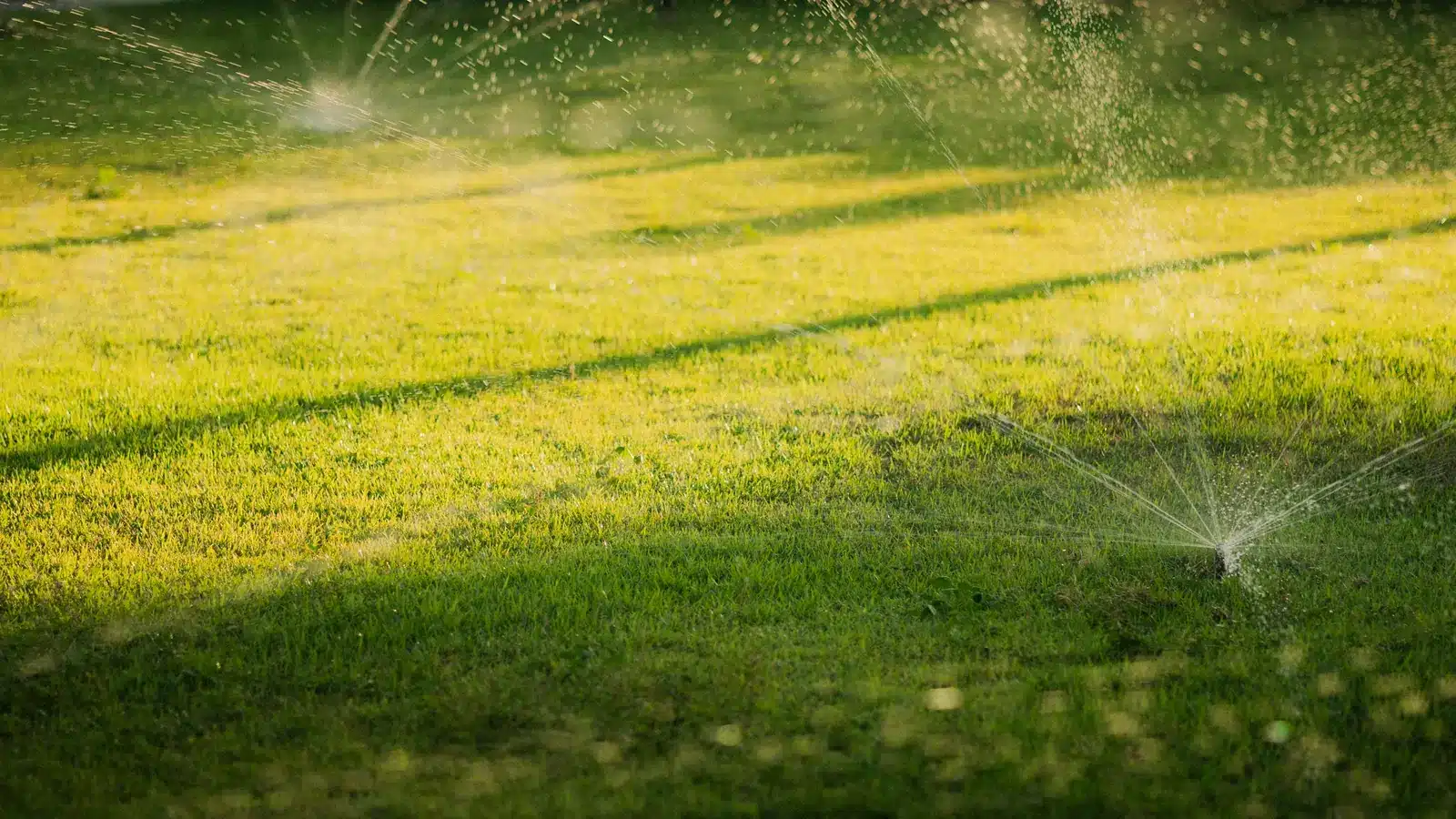
To adjust sprinkler heads, turn on the zone and watch each one: twist a spray nozzle’s collar to set its arc and turn the screw on top to shorten its throw, and use the maker’s key in a rotor’s top socket to change its arc. Start with the simple fixes first. UF/IFAS audits of 3,416 Florida irrigation systems found the spray blocked by plants at 59.4% of homes, and UF/IFAS says a tilted head throws more water to one side.
What do you need before you adjust a sprinkler head?
You need the head’s make and model, a small flat screwdriver or the maker’s key, and a trowel to clear grass from around the head. The adjustment steps differ by brand and model, so read the maker’s own instructions before you turn anything.
Run one zone at a time from the controller and walk it while it runs. Watch for four things: heads that lean, heads that sit below the grass, spray that hits the driveway or the house, and spray that stops short at a shrub. Each one has a fix below. Keep the testing short and set your regular run times for your address’s watering day, which the Hillsborough County watering schedule and Pasco County watering days guides lay out.
How do you adjust a spray head?
Turn the whole nozzle to aim it, twist the collar to set how wide it sprays, and turn the top screw to set how far. UF/IFAS Gardening Solutions says it is “easy to twist a spray head, aligning the nozzle pattern with the plants it’s meant to irrigate” (Irrigation System Maintenance).

-
Aim it
With the zone running, turn the popped-up nozzle by hand until the spray pattern lines up with the lawn or bed it serves.
-
Set the arc
On a Rain Bird HE-VAN nozzle, twist the center collar to widen or narrow the pattern anywhere from 0 to 360 degrees, with no tools (Rain Bird tech spec).
-
Set the distance
Turn the stainless screw on top of the nozzle to shorten the throw, by up to 25% on that nozzle, until the spray stops at the edge of the lawn.
-
Check the edges
Look for water landing on the sidewalk, driveway or street; UF/IFAS says to adjust heads so they water “only your landscape.”
How do you adjust a rotor?
A gear-drive rotor such as the Hunter PGP turns back and forth from a fixed edge, so you set the arc from that edge with a key and the distance with a screw. On a Hunter PGP rotor, the right stop is the fixed side, according to Hunter’s adjustment instructions.
-
Find the right stop
Turn the nozzle turret by hand to its right stop and hold it there: that edge does not move.
-
Change the arc
Put the plastic key end of the Hunter wrench in the top socket and turn it clockwise to widen the arc or counterclockwise to narrow it; each full turn moves the arc 90 degrees.
-
Change the distance
Turn the radius screw clockwise with the steel hex end (or a 3/32 Allen key) to shorten the throw by up to 25%.
-
Stop at five turns
Hunter warns that more than five full clockwise turns on the radius screw may lose the screw.
The Hunter PGP-ADJ adjusts from 40 to 360 degrees and can be set with the water on or off. Other rotors can use different keys and steps, so follow the instructions for your own model.
Why is one part of the lawn dry when the sprinklers run?
When the zone runs but one patch stays dry, start with the heads around it. UF/IFAS names five head problems that leave dry or wasted spots, and each has a fix you can do yourself.
| What you see | Likely cause | Fix |
|---|---|---|
| Dry on one side of the head | The head leans | Dig around it and set it at a right angle to the soil |
| Spray hits the grass beside the head | The head sits below the turf | Raise it so it pops up above the grass |
| Spray stops at a shrub or palm | Plants block the stream | Trim the plant or move the spray pattern |
| Spotty or crooked spray | A clogged or warped nozzle | Clean the nozzle, or replace a warped one |
| Water on the drive or sidewalk | The head is aimed wrong | Turn the nozzle and shorten the radius |
UF/IFAS Gardening Solutions states the first two: “Adjust sprinkler heads to be at right angles to the soil surface,” and “make sure heads pop up above the turfgrass canopy.” It adds that “it is not uncommon to have to raise heads a couple of times a year,” and that feet and lawnmowers knock heads out of line, so check them often (Irrigation System Maintenance).
In audits of 3,416 Florida home irrigation systems, mostly in south Florida, sprinkler streams blocked by vegetation turned up at 59.4% of homes, the third most common problem after two zone design faults.
Source: UF/IFAS, Frequency of Residential Irrigation Maintenance Problems (AE472)
How do you check the coverage after adjusting?
Run a catch-can test: set out a row of small, straight-sided cans and run the zone for 15 minutes. UF/IFAS’s Watering Your Florida Lawn says to place them “in a straight line from your sprinkler to the edge of the watering pattern” and check that each holds about the same amount of water.
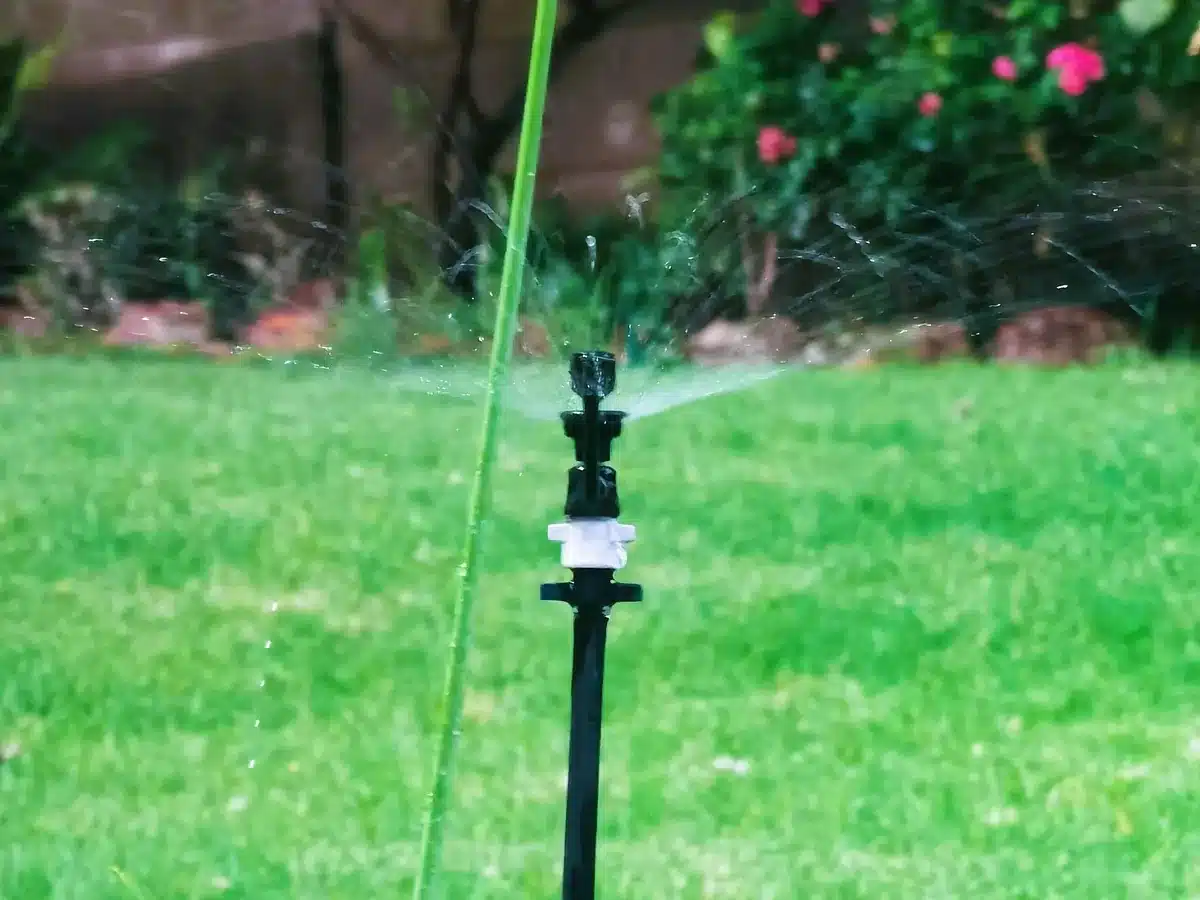
Uneven cans point back to the table above: a can that stays dry sits where a head leans, sinks or is blocked. The same test tells you how long to run the zone, because UF/IFAS says to apply 1/2 to 3/4 inch of water when the lawn shows drought signs: blades folded in half, a blue-gray tint, or footprints that stay.
When should you stop and call an irrigation contractor?
Stop when the problem is under the ground or in the controller: a geyser or broken pipe, a valve that will not shut off, a zone that will not start, water at the meter, or a rain shutoff that does not work. Those are repairs for a licensed irrigation contractor.
Florida Statutes section 373.62 requires anyone who installs an automatic landscape irrigation system to keep a working device that stops it when there has been enough rain, and requires a licensed contractor who works on the system to test that device and repair it before finishing other work (2025 Florida Statutes).
This is general information about the statute, not legal advice. Check the current law, or ask your county, before you rely on it. Medscapes does not install or repair irrigation systems. Our full-service lawn care includes a sprinkler check, where the crew watches coverage and flags problems so you can call a licensed contractor.
The one thing to do this week: run each zone, walk it with the table above in hand, and fix the leaning, sunken and blocked heads first. Those need a trowel and pruners, not a contractor.
Frequently asked questions
How do you adjust a Rain Bird spray nozzle?
On a Rain Bird HE-VAN variable arc nozzle, twist the center collar to set the arc anywhere from 0 to 360 degrees, then turn the stainless screw on top to shorten the throw by up to 25% (Rain Bird tech spec). No tools are needed for the arc. Rain Bird rotors use different steps, so check the instructions for your model.
How often should you check your sprinkler heads?
UF/IFAS Gardening Solutions suggests testing the system on a schedule, for example when the clocks change in spring and fall, and checking alignment often, because feet and mowers knock heads out of line. It also expects heads to need raising a couple of times a year.
How high should a sprinkler head pop up?
A pop-up head should rise above the grass around it. UF/IFAS Gardening Solutions says to “make sure heads pop up above the turfgrass canopy,” and notes that raising heads a couple of times a year is common. Dig around a sunken head and lift it to the new height rather than letting the grass grow over it.
Sources
- UF/IFAS Extension. Frequency of Residential Irrigation Maintenance Problems (AE472), Olmsted, Dukes and Cardenas. Checked October 18, 2026. ask.ifas.ufl.edu
- UF/IFAS Gardening Solutions. Irrigation System Maintenance. Checked October 18, 2026. gardeningsolutions.ifas.ufl.edu
- Rain Bird. High-Efficiency Variable Arc Spray Nozzles (HE-VAN), tech spec. Checked October 18, 2026. rainbird.com
- Hunter Industries. Residential Rotor: Adjustment Instructions. Checked October 18, 2026. hunterirrigation.com
- UF/IFAS Extension. Watering Your Florida Lawn (ENH9/LH025), Trenholm, Unruh and Cisar. Checked October 18, 2026. ask.ifas.ufl.edu
- The Florida Senate. 2025 Florida Statutes, section 373.62. Checked in a browser October 18, 2026. flsenate.gov
Rather have someone keep an eye on it?
Call (813) 382-5801 or send the estimate form. Our lawn care plans include a sprinkler check, and Doug Wilson writes the quote himself.
- 1Call or book online
- 2Doug walks the yard with you
- 3You get a written quote