Guides
How Long Does Sod Take to Root in Tampa Bay?
How to tell when new sod has rooted, what slows it down, and how the water district's 60-day new-lawn window fits around it.
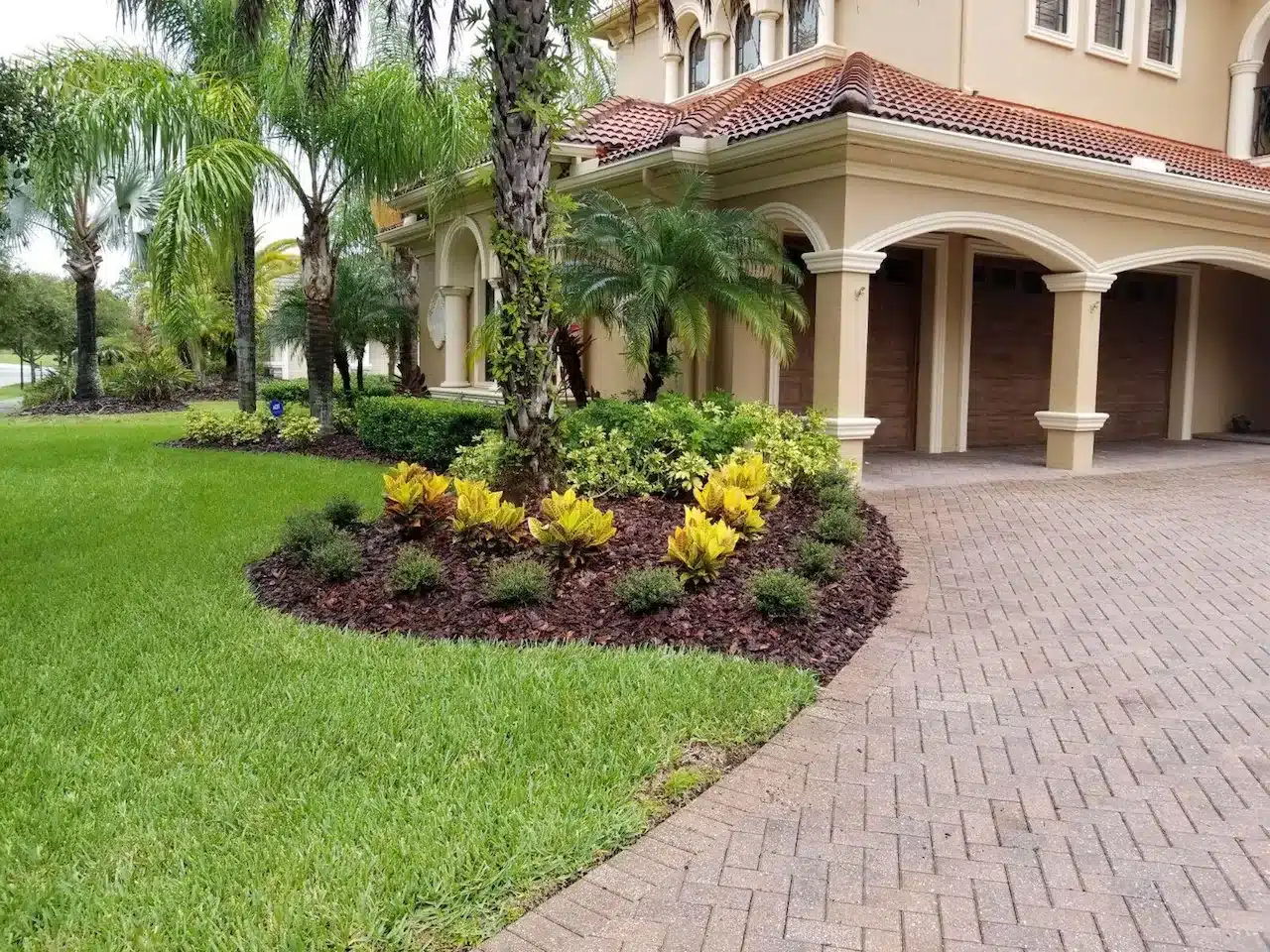
New sod in Tampa Bay takes three to four weeks to root, as long as it was rolled tight onto prepared soil and watered on the UF/IFAS establishment schedule. Check it rather than counting days: pull up on a corner, and once it no longer lifts, the roots have pegged down. The Southwest Florida Water Management District’s 60-day new-lawn window is a watering allowance, not a rooting clock.
When should new sod be rooted?
New sod should be rooted by the end of its third or fourth week. UF/IFAS Extension’s guide Establishing Your Florida Lawn says that “three to four weeks after sodding, the grass should be fully established, and irrigation can begin on an as-needed basis.”
That window is the end of a watering schedule that steps down as the roots grow: several short waterings a day at first, then once a day, then two or three times a week. The full schedule, with the amounts, is in our guide to how often to water new sod. Sod laid in the right season, on prepared ground, with every piece pressed to the soil, should land inside the window. Sod missing one of those can take longer.
| Stage | UF/IFAS watering | District rule | What to check |
|---|---|---|---|
| First 7 to 10 days | Several short (5 to 10 minute) cycles a day | Any day (days 1 to 30) | Edges stay pressed to the soil; no dry, curling seams |
| Next 7 to 10 days | Once a day, 1/4 to 1/2 inch | Any day (days 1 to 30) | First lift test at an edge |
| Until established, about weeks 3 to 4 | Two or three times a week, 1/4 to 1/2 inch | Any day (days 1 to 30) | Edges no longer lift: time for the first mow |
| Days 31 to 60 | As needed once established | Three days a week, with a written schedule | The lawn behaves like the rest of the yard |
| Day 61 on | As needed | Your address’s one day a week | Back to the normal routine |
How can you tell if sod has rooted?
Pull on an edge: sod that has rooted holds, and sod that has not lifts away from the soil. That is the test UF/IFAS uses in Establishing Your Florida Lawn, which says to start mowing once the roots “have pegged down and the grass will no longer ‘lift’ when pulled on at the edges.”
-
Start at an edge
Pick a corner or the edge of a piece, where UF/IFAS describes the test.
-
Peel it back
Grip the edge with your fingers and pull up slow and steady, as if peeling back a rug.
-
Read the result
If the piece holds, the roots have pegged down; if it comes up off bare soil, it has not rooted yet.
-
Press it back
Set any piece that lifted back in place, firm it with your foot, and water it on its next cycle.
-
Check several spots
Test a few places across the lawn before the first mow, not just one.
The lift test is also the mowing signal. The UF/IFAS Homeowner’s Guide to St. Augustinegrass puts the first mow “generally 14-21 days after planting,” and LH013 asks for a sharp blade and dry grass for it.

What slows new sod from rooting?
Poor contact with the soil, ground that was not prepared, and the wrong time of year are the three causes UF/IFAS points to. Each one pushes rooting past the three-to-four-week window in LH013.
- Air pockets under the sod: UF/IFAS says to tamp or roll new sod “to remove air pockets and ensure the roots have good contact with the underlying soil so that it does not dry out during establishment.” A piece sitting on an air gap is the piece that dries out.
- Ground that was not prepared: the same guide says the area “should be properly prepared (e.g., tilled and raked smooth) prior to sod delivery.” Our sod installation cost guide explains what that prep involves on a Tampa Bay lot.
- The time of year: for St. Augustine grass in central Florida, the UF/IFAS homeowner’s guide names spring and late summer to early fall as the best planting times, and says to “avoid the cold winter or hot, dry summer months.”
- Watering that never steps down: UF/IFAS moves from several waterings a day to once a day after the first 7 to 10 days, then to two or three times a week. Keeping the first-week schedule running is more water than the guide calls for.
How does the District’s 60-day watering window fit?
The 60-day window sets how long new sod may get extra water, not how long it takes to root. Under the Southwest Florida Water Management District’s current order, in effect through March 31, 2027, new lawns may be watered any day for days 1 to 30 and three days a week for days 31 to 60, according to the District’s restrictions page.
Southwest Florida Water Management District, days 31 to 60 of a new lawn: even-numbered addresses may water on Tuesday, Thursday and Sunday, and odd-numbered addresses on Monday, Wednesday and Saturday. The order requires a written schedule of establishment watering.
Because UF/IFAS expects sod to be established in three to four weeks, a lawn on track has rooted well before day 30. After day 60 it waters on your address’s one day like the rest of the yard, under the same order. County and city rules differ on the details: see the Pasco County watering days or the Hillsborough County watering schedule. This is general information about the District’s order, not legal advice. Check the current order or ordinance, or ask your county, before you rely on it.
When can you walk on new sod?
When it passes the lift test across the lawn. LH013 gives no walking date of its own, so the edge test is the guide: while pieces still lift, keep traffic to watering checks and setting sprinklers.
Once the edges hold everywhere you test, the first mow is the first real traffic UF/IFAS describes. Play, pets on the run and anything with wheels can wait for that point.
What if part of the sod never roots?
When only a few pieces still lift after the four weeks UF/IFAS allows, press them back down rather than replace them. Firm them onto the soil, water them on their next cycle, and test them again before the next mow.
Whole sections that still lift a month after install point to something under the sod: an air gap, ground that was never prepared, or a planting in the dry heat. That is when relaying those sections makes sense, on prepared soil. Medscapes lays St. Augustine, zoysia and Bermuda sod as part of new sod and planting work across Tampa Bay.
Sections still lifting a month after the sod went down? Doug can walk the yard and tell you whether it is a few pieces or the ground under them.
Write the install date on a calendar the day the sod goes down. It starts both clocks: the lift test at about three weeks, from UF/IFAS, and the District’s 60-day watering window, from the order.
Frequently asked questions
Can you speed up sod rooting?
There is no shortcut past the basics in UF/IFAS’s establishment guide: sod rolled tight onto prepared soil, a watering schedule that steps down, and planting in spring or late summer to early fall. Each one removes a reason sod roots late. Early fertilizer is not one of them: the UF/IFAS homeowner’s guide waits 30 to 60 days after planting before the first feeding.
Can you water new sod too much?
The UF/IFAS schedule answers that by stepping down: several short waterings a day for the first 7 to 10 days, once a day for the next 7 to 10, then two or three times a week. Staying on the first-week schedule after those first days is more water than the guide calls for. Under the District order, days 31 to 60 also limit new lawns to three days a week.
Can you lay sod straight over dirt or old grass?
UF/IFAS calls for the area to be tilled and raked smooth before the sod arrives, then for the sod to be rolled so its roots touch the soil. Sod laid over old grass or unprepared ground skips both steps. Our sod installation cost guide explains what that prep adds to a job.
Sources
- UF/IFAS Extension. Establishing Your Florida Lawn (ENH-03/LH013), A. J. Lindsey, Marco Schiavon and J. Bryan Unruh. Checked October 18, 2026. ask.ifas.ufl.edu
- Southwest Florida Water Management District. District Water Restrictions. Checked October 18, 2026. swfwmd.state.fl.us
- UF/IFAS. Homeowner’s Guide to St. Augustinegrass Management (fact sheet). agronomy.ifas.ufl.edu
Sod still lifting after a month?
Call (813) 382-5801 or send the estimate form. Doug Wilson walks the yard and writes the quote himself.
- 1Call or book online
- 2Doug walks the yard with you
- 3You get a written quote